Conferences and Education
Case Conferences and Core Didactic Curriculum
Our core faculty-led didactic curriculum occurs weekdays from 12-1 pm. This is protected time, so residents are excused from clinical duty to attend. The faculty lecture topics are commonly- encountered diseases or clinical scenarios to deliver high-yield information to our new trainees. These lectures are repeated annually or biannually. The entire curriculum repeats on a three-year cycle so every trainee enters the Boards Exam with a well-rounded knowledge base of basics, plus the finer points of the medical specialties. The topics in the second half of the academic year can also cover career planning, financial planning, anti-racism, minority-inclusive medicine, and fellowship panels.
The faculty didactics are curated by the Chief Resident for Research and Education and cover most topics tested on Internal Medicine Boards. Attendings from every Internal Medicine specialty, with the addition of Neurology, Psychology, and Radiology, are invited to discuss high-yield topics with an emphasis on physical diagnosis and patient management.
Case conferences are highly interactive, even when given remotely over Zoom. The cases selected are either an unusual presentation of a must-know diagnosis or a classical presentation of a rare disease. Usually, the cases are patients still under our care, giving each case a degree of relevancy. Most of the time, attending physicians are present to oversee and help guide the discussion and provide teaching points for the residents. A review of the disease, with emphasis on diagnosis and management, is presented at the end. Additionally, every Thursday case conference is overseen by our supervisory program director, Dr. Fred Zar, making it a fun exercise to try to stump him. Outside of the noon conference time, we have expanded our didactics with the inclusion of morning report every Tuesday at UIH and every Wednesday at the along with a faculty preceptor.
Throughout the year, we augment the curriculum with wellness week to discuss topics to lower burnout, an ethics week, and an urban global health week. During those specially tailored weeks, topics in medical ethics and global medicine are covered.
Resident Meetings
In addition to the lecture series noted above, we hold a monthly ‘Residents’ Meeting’ led by the Program Director and Chief Residents. Topics include everything from resident recruitment to ‘state-of-the-residency’ issues to research and educational opportunities. A monthly “Resident Lopata Legend of the Month” is granted to one individual who goes above and beyond the call of duty. Items of change are also discussed, and when implemented, feedback is obtained in this and other settings.
Summer Educational Series
The Summer Educational Series is geared towards interns. These lectures cover a wide range of high yield topics including Pain Management, Inpatient Diabetes Management, offerings at the School of Public Health, How to find a Mentor, and How to Get a Research Project Started. These are offered once a week for the first two months of internship. It is required for all first year trainees, but open to all residents.
Grand Rounds
Grand rounds are given each Tuesday during noon conference 12-1pm throughout the academic year and cover topics and research led by the Department of Medicine. These lectures are usually organized by the Program Director, working in concert with the Division Chiefs. Each Internal Medicine specialty is assigned a month in which to invite guest speakers to discuss rapidly evolving aspects of their specialties. There is an emphasis on discussion of recent advances in medical therapeutics that have a high likelihood of changing the standard practice of medicine over the next few years. These conferences are attended by the entire Department of Medicine faculty.
Multidisciplinary Conference and Journal Club Heading link
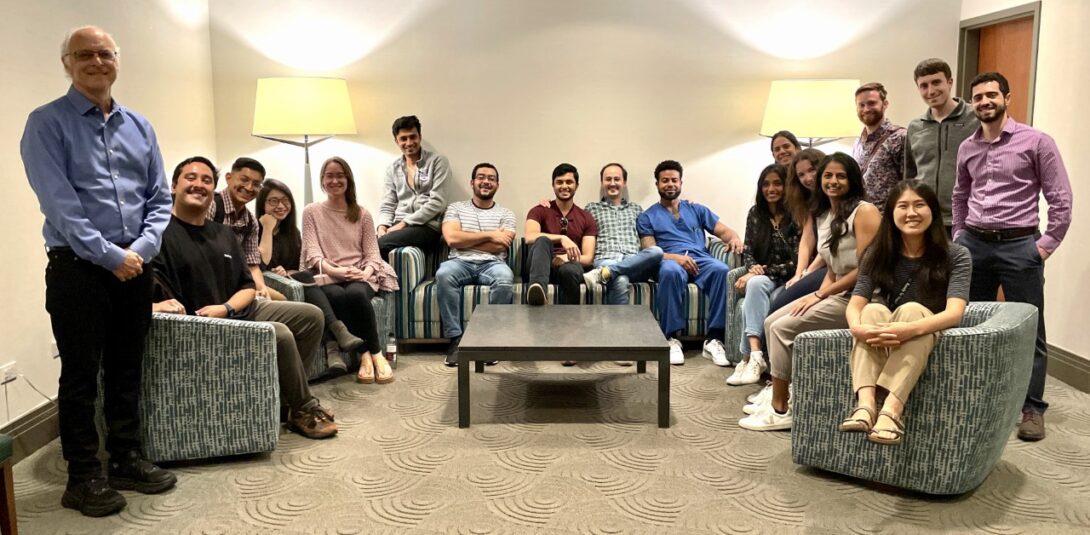
During the third year of internal medicine residency, all graduating seniors conduct either a Multidisciplinary Conference (MDC) or an Evidence-Based Medicine (EBM) presentation during the noon conference hour.
For MDCs, the cases discussed revolve around currently or recently admitted patients who had a complicated hospital course due to their multiple co-morbidities, requiring the input of numerous specialists. Faculty from each of the specialties are in attendance. This conference creates a forum in which residents can hear attending faculty from the internal medicine subspecialties discuss their thought processes related to a complex case and how diagnostic and therapeutic interventions were chosen when it was not immediately obvious what the best choice would be. Our graduating residents find that working on this presentation and guiding the discussion strengthens their clinical decision-making skills.
For EBMs, residents work in pairs and select a topic that has rapidly evolved, or one in which there is excellent evidence guiding management. They read the primary literature and then walk the audience of faculty, residents and students through the studies, assessing the strengths and weaknesses of each one. Take home points at the end provide a summary of how we can translate the data into excellent patient care. Evaluating evidence is a key aspect of academic training and our residents find constructing these presentations to be an excellent teaching tool.
Morbidity and Mortality
Every month the residency program conducts a Morbidity and Mortality conference in place of the noon conference. The purpose of these conferences is to dissect a patient’s chart, documentation, decision-making and hospital course in hopes of learning what we could do better next time. A senior resident puts the presentation together and an attending from Pulmonary and Critical Care Medicine leads the discussion along with specialty consultants who contributed to the patient’s management.
Board Preparation Tools Heading link
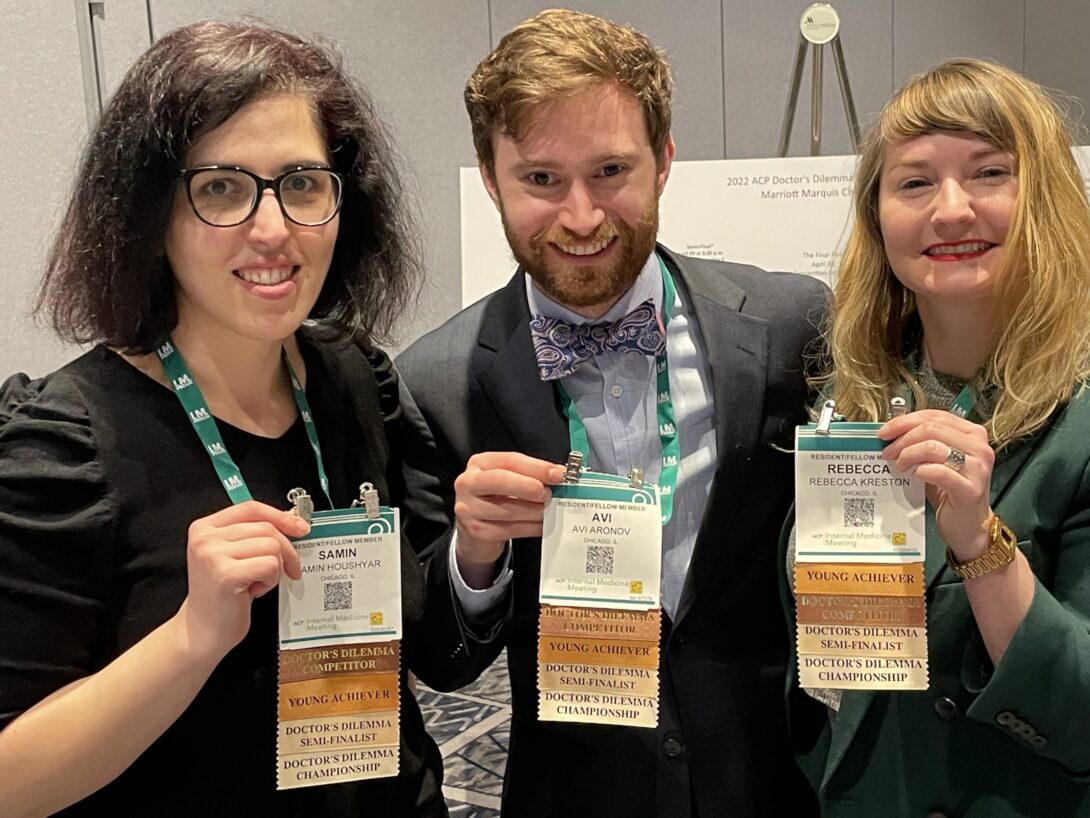
Our excellent Boards pass rates are due in a large part to the commitment of our faculty in providing high yield didactics throughout the year. We recognize, however, that studying is an individualized process and what is effective for one resident may not be for another. To that end, we provide a variety of preparation tools and materials. Using the results of the In-training Exam (ITE), the Chief Resident for Research and Education prepares Boards study plans for residents who need long term approaches to preparedness. Generalized study plans are available to residents of every year, broken down into blocks based on degree of clinical responsibility. During the last 2 blocks of the academic year, noon conference is routinely replaced by resident-led MKSAP review sessions in which the smartphone-based Polleverywhere system is used to answer MKSAP questions and review why the selected answer is correct, but perhaps equally importantly, why the other answers are wrong. A faculty member from that subspecialty covered in MKSAP is usually present to lead discussions on best answer choices and test taking skills. All residents attend these sessions, getting the PGY1s in the habit of answering Boards-style questions early on. Additionally, we purchase a video-based Boards preparation course every year which the PGY3s watch weekly in the last few months of residency to prepare for the exam.
For more information or to see what is going on in our residency, you can also follow us on instagram.