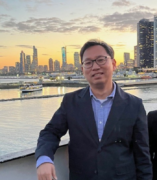
Kiwook Kim, PhD
Associate Professor
Department of Pharmacology & Regenerative Medicine
Contact
- Building & Room:
- 909 S Wolcott
- Office Phone:
- (312) 355-8150
Email:
Related Sites:
Lab
- Building & Room:
- 4160 COMRB
About
Education/Training
B.S., Biomedical Science - Handong University, S. Korea (2004)
M.S., Cell Biology - Handong University, S. Korea (2007)
Ph.D., Immunology - Weizmann Institute of Science, Israel (2011)
Postdoctoral Fellow, Microbial Pathogenesis - Yale University School of Medicine, New Haven, CT (2014)
Postdoctoral Fellow, Pathology & Immunology - Washington University School of Medicine, St. Louis, MO (2017)
Research Interests
Mononuclear phagocytes consist of monocytes, dendritic cells and macrophages. They contribute to tissue homeostasis in steady state and orchestrate immune response in a pathological condition. In the past decade, there has been a dramatic progress in our understanding of development and function of mononuclear phagocytes. By generating constitutive- and tamoxifen inducible- Cre mice driven by CX3CR1 promoter, we previously revealed most tissue resident macrophages are derived from embryonic precursors (Immunity, 38: 79-91, 2013). Also, we demonstrated a minor population of tissue-resident macrophages can be replenished by circulating blood monocytes after birth (JEM, 213: 1951-1959, 2016).
Our lab investigates development and physiological roles of mononuclear phagocytes in steady state as well as pathological conditions (both inflammatory phase and resolving-phase) taking advantage of cutting-edge lineage-tracing approaches, cell ablation strategy and in-vivo imaging techniques combined with high throughput transcriptomic analysis.
Specifically, we focus on (1) roles of two monocyte populations (Ly6Chi CX3CR1int and Ly6Clo CX3CR1hi subsets) in either promoting or resolving the inflammation, (2) transition of monocytes to macrophage/dendritic cells and their impact on inflammation/ tissue repair, and (3) distinct roles of embryonic-derived macrophages and monocyte-derived macrophages in a variety of physiological or pathological conditions.
Postdoctoral & Lab Technician positions currently available. Please send CVs to kiwook@uic.edu
Selected Grants
NIH, The role of membrane-associated macrophages in health and inflammation (R01DK126753), PI
NIH, Macrophage Plasticity in Inflammatory Lung Injury (P01HL151317), PI
Selected Publications
Education
B.S., Handong Global University, S. Korea; Biomedical Science (2004).
M.S., Handong Global University, S. Korea; Cell biology (2007).
PhD, Weizmann Institute of Science, Israel; Immunology (2011).
Postdoc, Yale University School of Medicine, New Haven; Microbial Pathogenesis (2014).
Postdoc, Washington University School of Medicine, St. Louis; Pathogenesis & Immunology (2019).
Professional Memberships
American Association of Immunologists (AAI)
European Macrophage/DC Society (EMDS)
Research Currently in Progress
- Heterogeneity, Origins, and role of Macrophages in Health and Inflammation.
- Macrophage, DC, and monocytes-mediated cytokine regulation
- Commensal microbiota-Immune cell interaction
- Stromal cell (fibroblasts/epithelial cells)- Immune cell interaction